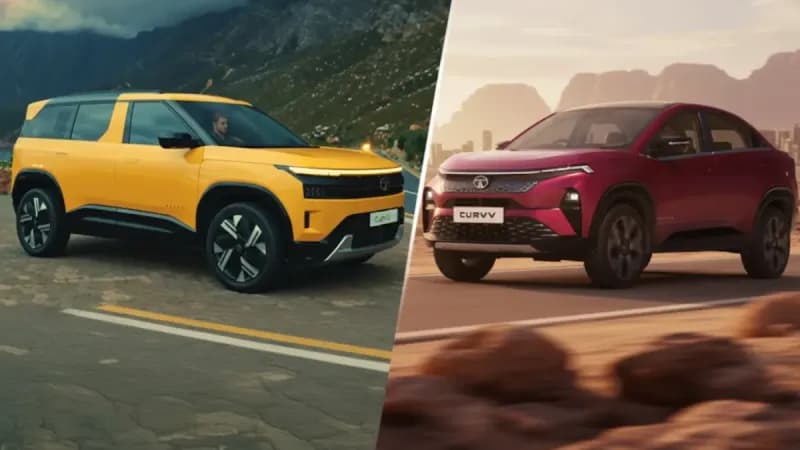

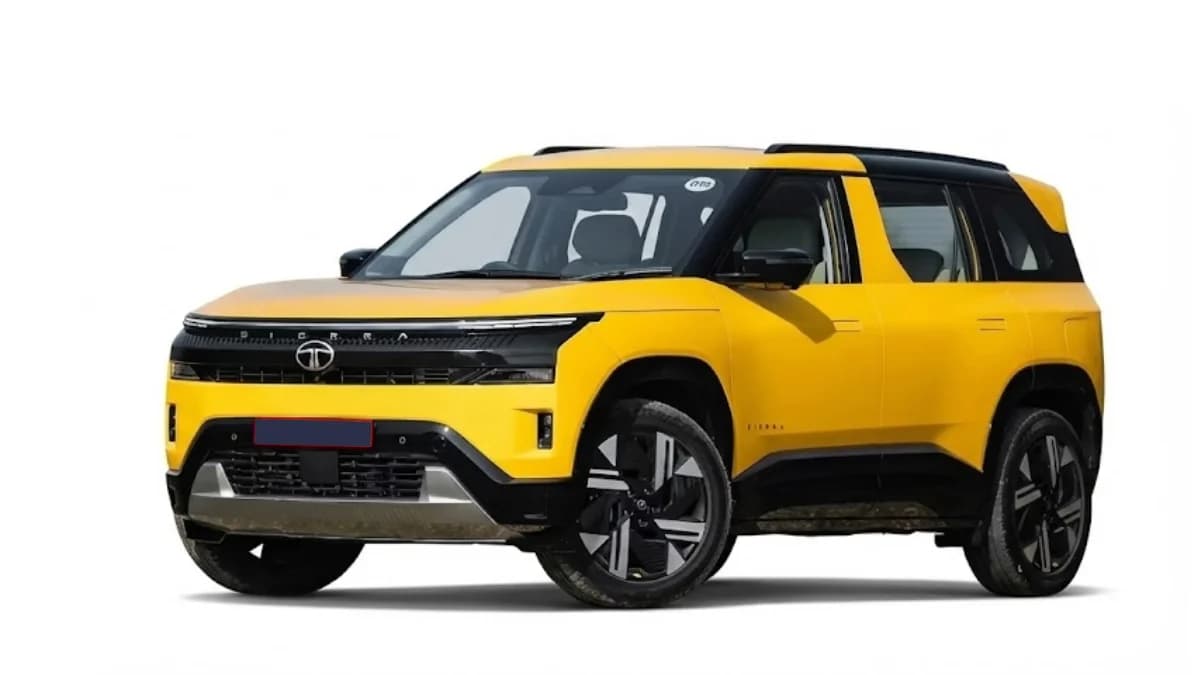
To be honest, whenever the name Tata Sierra pops up, there’s this old-school spark of nostalgia that hits me. And then Tata Curvv walks in more flashy, more tech-loaded. When you place both next to each other, sometimes it genuinely feels like Tata itself isn’t sure what expectations it wants people to carry.
| Point of Comparison | Tata Sierra | Tata Curvv |
|---|---|---|
| Overall Personality | Mature, nostalgic, grounded | Flashy, modern, tech-focused |
| Feature Approach | Safe & expected features; some variant-based cost cutting | More features, richer tech, but polishing inconsistent |
| Interior Experience | Minimalistic, classy; some lag in screen response | Futuristic, twin screens; touch controls not always practical |
| Software Stability | Better than before but still inconsistent (lag, occasional camera freeze) | Feature-rich but more glitches (wireless AA/ACP drop, ADAS sharp) |
| ADAS Behaviour | Smooth but not perfectly calibrated | More aggressive, sometimes overreacts |
| Touchscreen / UI | Big and clean UI but slight lag | Smooth animations, but slower for quick actions |
| Real-World Usability | Practical, easy to live with | Good for tech lovers but daily usability affected |
| Design Impact | Iconic, nostalgic appeal | Youthful, sporty, EV-like vibe |
| Reliability Feel | Feels more stable in daily use | Feels experimental at times |
| Best For | Practical buyers | Tech-obsessed buyers |
| Paper Specs Winner | — | Curvv |
| Real-World Experience Winner | Sierra | — |
The real feature battle looks nice on paper, reality is a little different
Sierra looks like Tata focused more on design and brand recall, and played safe with the tech package. Curvv, on the other hand, feels like they went all-out on features, but real-world polish? A little shaky sometimes.

Oh, and let me tell you something During one of the dealer visits, I checked out the Curvv demo. Sales guy confidently goes Sir the ADAS is top-class. I immediately asked How stable is the lane keep? And he just said casually, “Sir, sometimes it overcorrects a bit, but the next update will fix it.” The moment he said that line, I remembered all those old Tata software struggles. Same dialogue I heard during the Punch EV launch. That bug took nearly three months to get somewhat stable.
Feature comparison without boring lists just the actual truth
Sierra plays it safe. Panoramic sunroof, ventilated seats, expected ADAS, big screen, 360 camera everything an Indian buyer expects is present. But some features being variant-based makes it obvious Tata was cost-trimming in a few places. Curvv gets more features, but polishing feels incomplete. For example, you get wireless Android Auto/Apple CarPlay, but connection drops occasionally (happened to me too). AC controls are touch-based, look great in the showroom, but in harsh sunlight, good luck reading those icons.
Sierra’s cabin old-school charm, new-age system not fully perfect
The Sierra interior is minimalistic and nice, but in a few places it feels like the team added features in a let’s just put this too manner. The infotainment screen is big and sharp, but the touch response sometimes gives a slight laggy feeling. Tata claims the new OS is here, but honestly, the same OS launched with the Harrier facelift, and early units had freezing issues with phone projection.

During one of my drives, the rear camera blinked right when I was close to a curb. That’s when it hit me beautiful car, but trust in the software? Not fully there yet.
Curvv’s cabin tech-heavy, but maybe a bit too much?
One look at the Curvv’s dashboard and you know Tata wanted a sporty, young, EV-ish vibe. Twin screens, sharp UI, smooth animations all good. But as far as I’m concerned, flashy animations waste time during daily use. Once while adjusting temperature in the Curvv’s climate UI, it took much longer than my friend’s Creta with simple rotary dials two seconds and done And those steering-mounted buttons a little squishy. Small issue, but you’ll notice it on longer drives.

ADAS behaviour both have issues, but for different reasons
Curvv’s ADAS reacts more actively, but sometimes almost too actively you feel it gripping the lane aggressively. Sierra feels smoother, but again, not perfect. In my opinion, Tata needs to retest their calibration in real Indian conditions I’m talking those narrow lanes near small ponds, not just the perfect straight highway outside the dealership.
So which one feels better?
If I put it straight: Sierra has a different charm. More mature. Less flashy, more digestible. Curvv is feature-loaded, but sometimes those extra features become its own burden. If you like clean, practical, sturdy vibes Sierra is your side. If you’re a tech-obsessed person who likes fancy Curvv will excite you more.
One more thing. Tata’s software track record still follows both cars like a shadow. But if I strictly compare the features, Curvv wins on paper. In real life though, Sierra feels a tad more reliable.
My final take
For me, this isn’t just a feature comparison. It’s a battle between flair and maturity. Curvv’s modern tech vs Sierra’s grounded personality. Both are good, but both are imperfect in their own ways. If you’re practical Sierra. If you’re into flashy-modern tech Curvv.
Just remember, nowadays it’s not the feature list that decides the car’s worth. It’s how the software behaves. And that’s exactly where Tata still needs to put in more honest homework.


