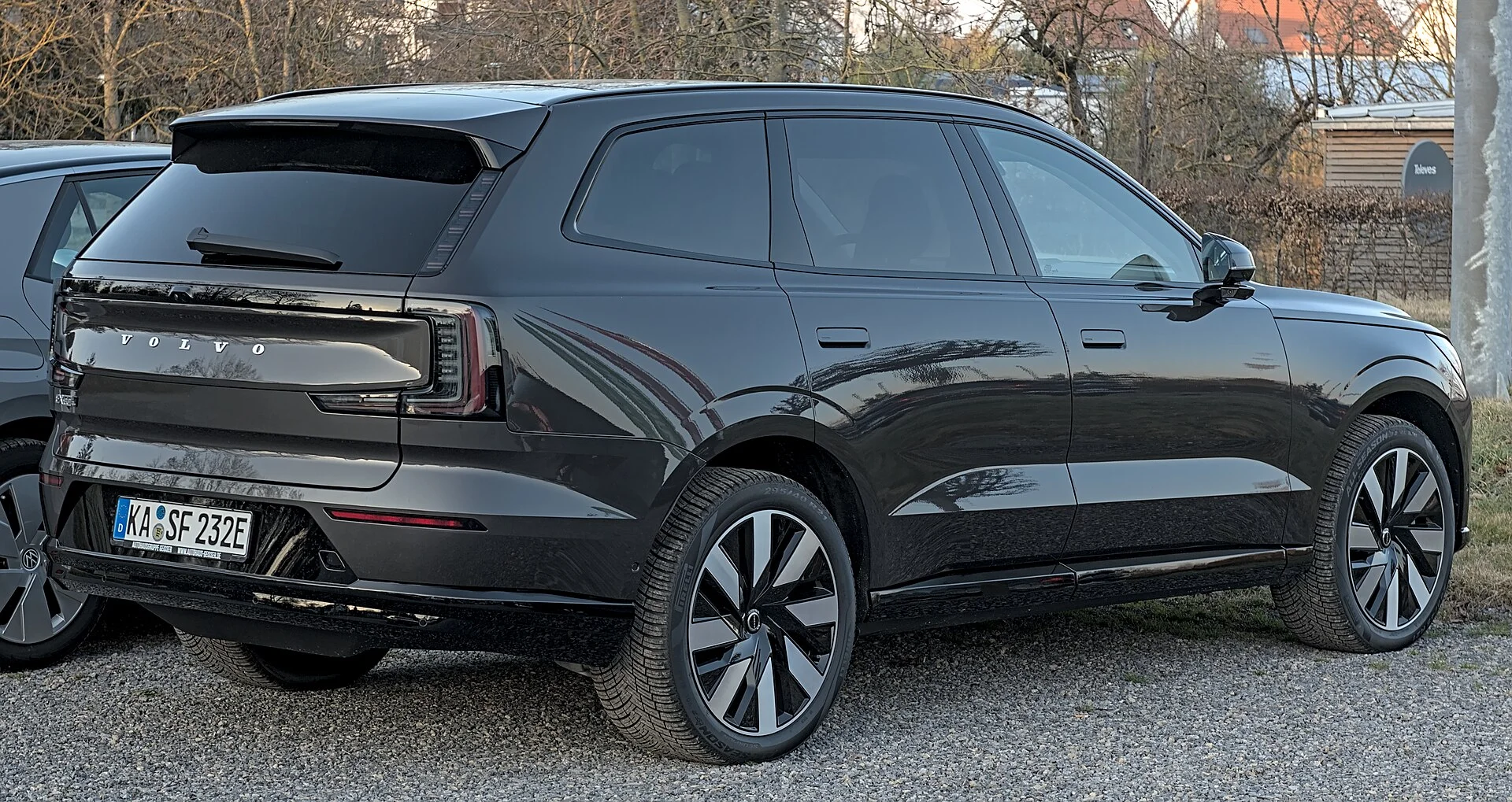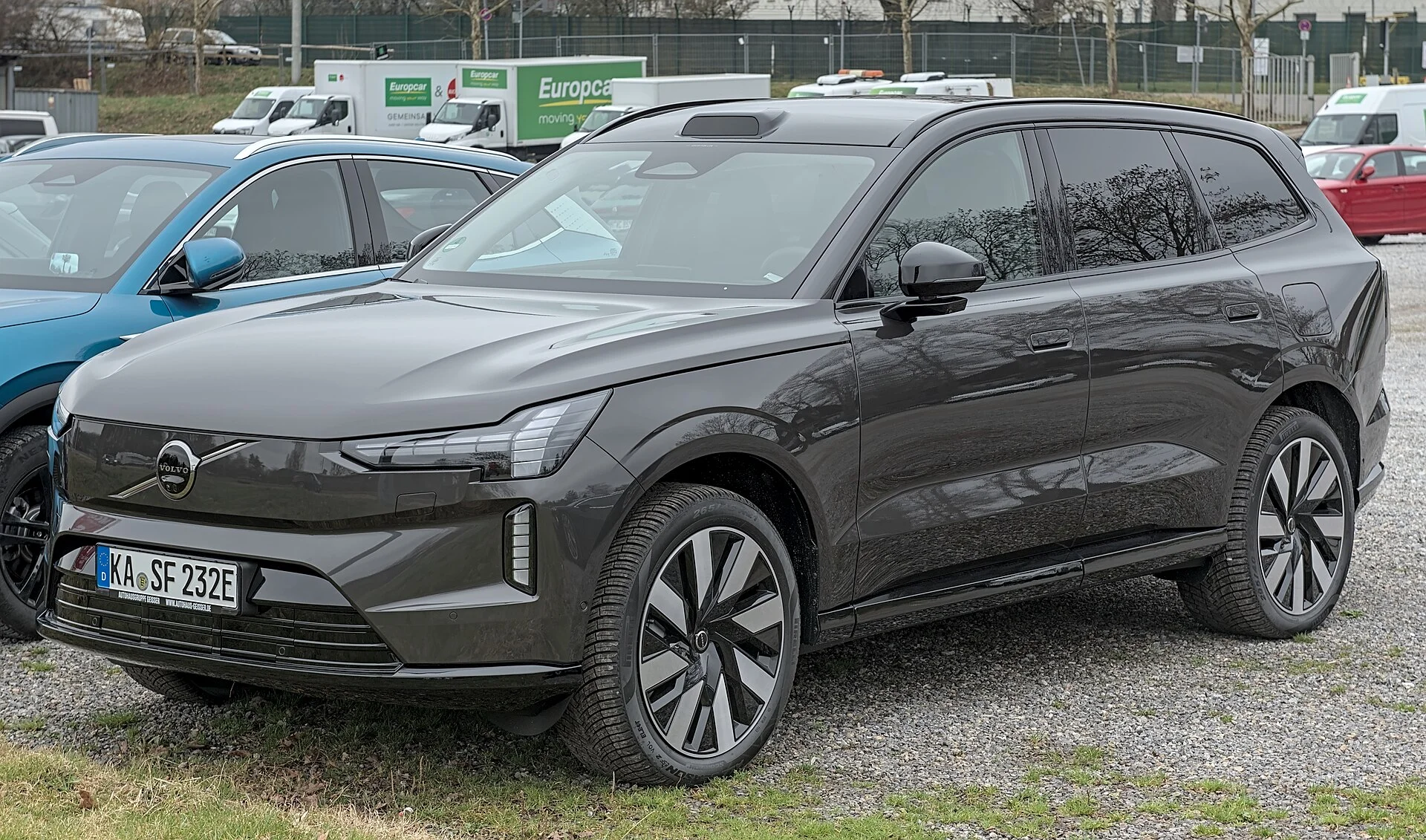

Range is the first question most buyers ask about an electric SUV, and the newly launched Volvo EX90 gives several different answers. Volvo quotes one figure for WLTP, the ICAT test gives another, and a road test gives a third. This guide explains what each number means, how fast the EX90 charges and what you get with the introductory home-charging offer.
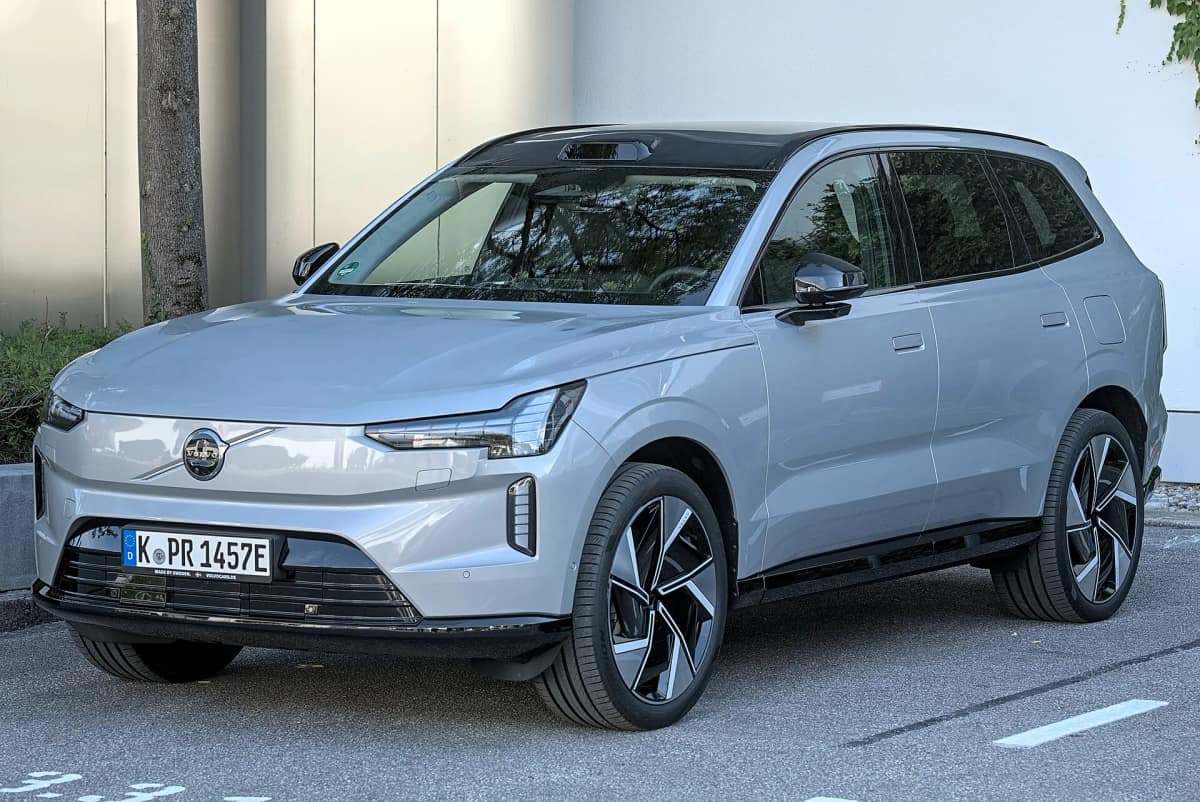
Volvo EX90 Battery at a Glance
The India-spec EX90 comes in one Twin Motor Ultra variant. It has a 106 kWh lithium-ion battery that feeds two electric motors with a combined 335 kW (456 hp) and 670 Nm. The SUV sits on Volvo's SPA2 platform, which uses an 800-volt electrical architecture. That higher voltage is what allows very fast DC charging.
| Range / Charging | Figure | Source |
|---|---|---|
| WLTP range (projected) | Up to 625 km | Volvo |
| ICAT range | Up to 725 km | Volvo / ICAT |
| Real-world estimate | About 580 km (≈5.5 km/kWh) | Autocar India review |
| Max DC charging | Up to 350 kW | Volvo |
| DC 10–80% | About 22 minutes | Volvo |
| Home charger (offer) | 11 kW wall box, bookings till 31 Dec 2026 | Volvo |
WLTP vs ICAT vs Real-World Range
WLTP (625 km) is the European test cycle, and Volvo calls its figure "projected". ICAT (up to 725 km) is the Indian test-agency figure. Indian test cycles usually give higher numbers because they are run at lower average speeds. Both are laboratory results.
For a real-world view, Autocar India recorded efficiency of about 5.5 km/kWh in its EX90 review, which works out to roughly 580 km per charge. Your range will depend on speed, air-conditioning use, the load in the car and the outside temperature. Steady highway driving at high speed will bring it down.
DC Fast Charging: 350 kW and 22 Minutes
Thanks to its 800V system, the EX90 accepts DC charging at up to 350 kW. Volvo claims a 10–80% top-up in about 22 minutes. In practice you will only get that speed at a charger that can deliver it. Most public chargers in India are slower, so expect longer stops at many stations. Fast charging also slows down as the battery fills up, which is why 10–80% is the figure carmakers quote.
Home Charging and the 11 kW Wall-Box Offer
Most EX90 charging will happen at home. Every booking made before 31 December 2026 comes with an 11 kW AC wall-box charger, along with a three-year service package and a 65% assured buyback after three years. A full AC charge of a 106 kWh battery takes several hours even at 11 kW, so overnight charging is the practical routine. Check your home's electrical supply before installation, because an 11 kW wall box typically needs a three-phase connection.
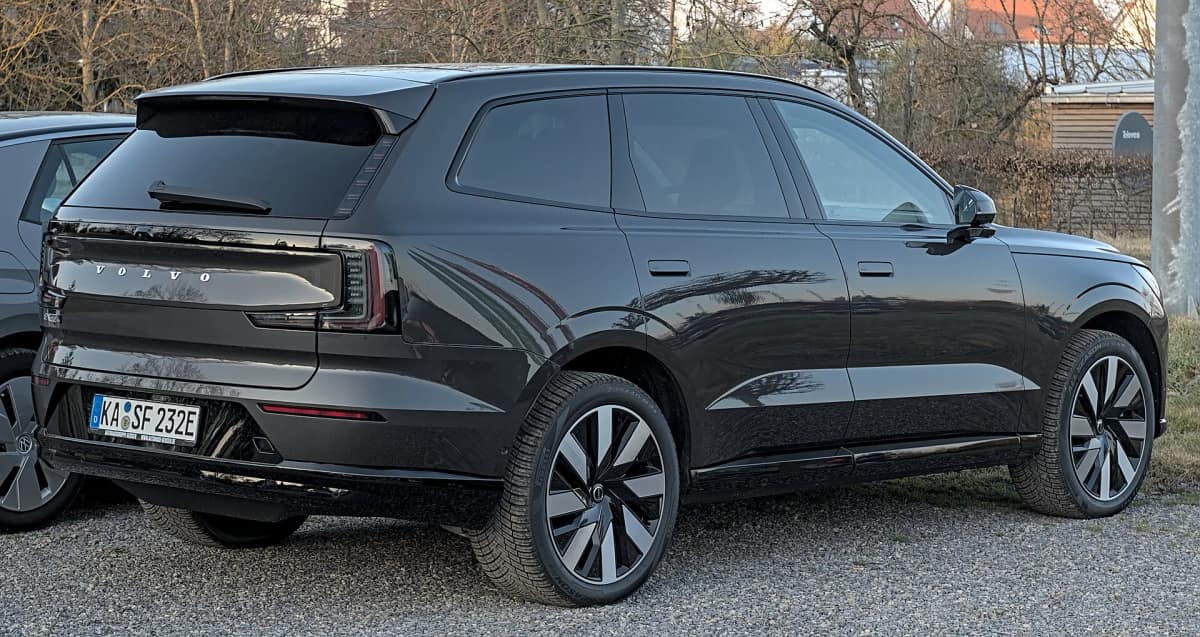
How It Compares
On paper, the EX90's 625 km WLTP figure is competitive with other luxury three-row electric SUVs. For a rival-by-rival breakdown, read our EX90 vs Kia EV9 vs Mercedes EQS SUV comparison. To see what else the car offers, see Volvo EX90 features and safety.
FAQs
What is the real-world range of the Volvo EX90?
Volvo claims 625 km (WLTP) and up to 725 km (ICAT). In Autocar India's review the EX90 returned about 5.5 km/kWh, which works out to roughly 580 km on its 106 kWh battery.
How fast does the Volvo EX90 charge?
It supports DC fast charging at up to 350 kW, and Volvo claims a 10-80% charge in about 22 minutes on a suitable charger.
Does the Volvo EX90 come with a home charger?
Yes. Bookings made before 31 December 2026 get an 11 kW wall-box charger as part of the introductory offer.
Why are the WLTP and ICAT range figures different?
They are different laboratory test cycles. The Indian ICAT figure (725 km) is higher than the European WLTP figure (625 km), and real-world range is usually lower than both.